
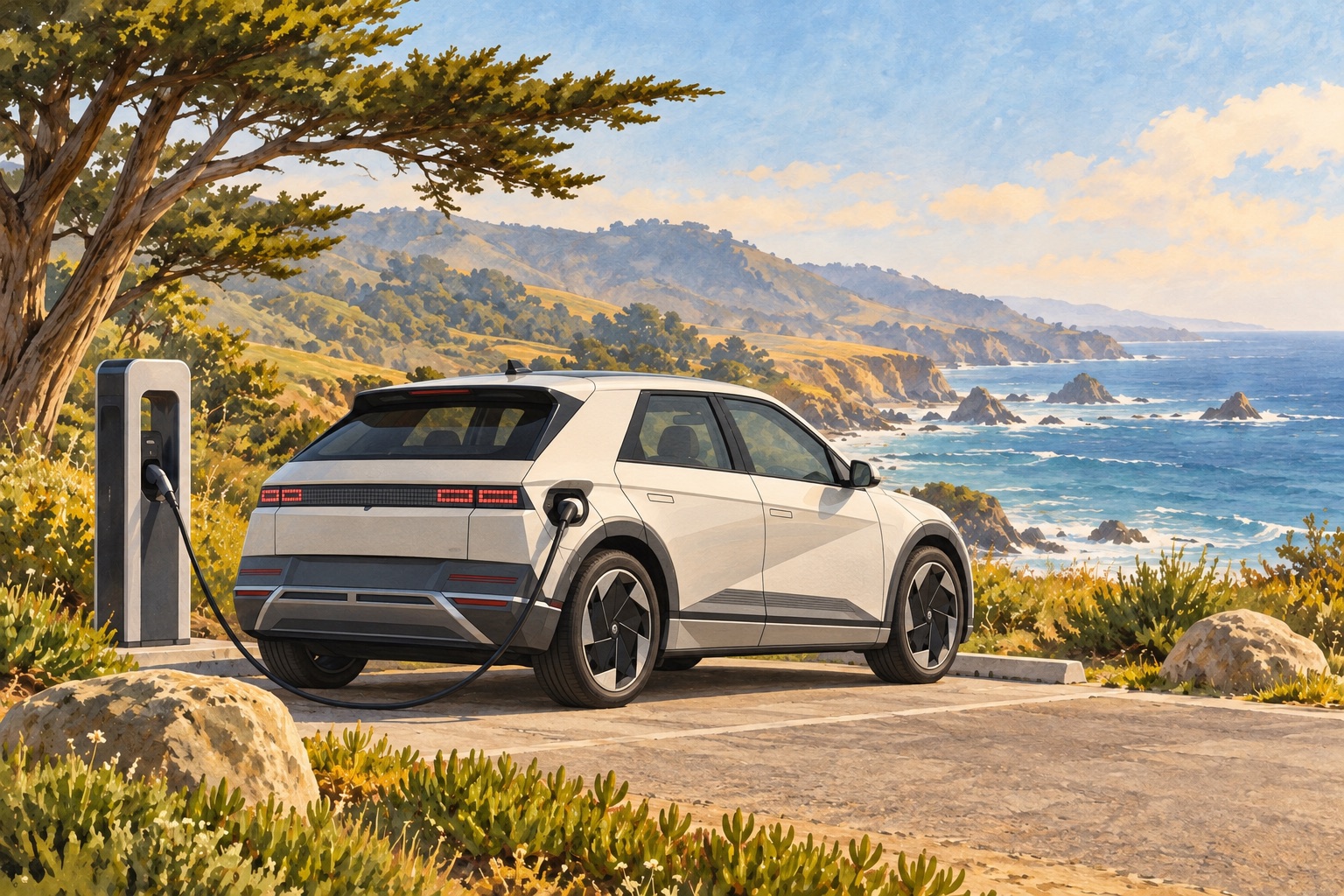
The coast road, a mountain weekend, a visit to friends: electric driving can be part of the trips you already love. The exciting choice is an EV that makes those journeys feel easy, with comfortable space and charging stops that fit a meal or a stretch of the legs. Our shortlist explores three different ways to get there, using published specifications and charging information.
Three ways to find your road-trip fit
| Research shortlist | Why consider it | Why you might skip it |
|---|---|---|
| Hyundai IONIQ 5 | A roomy hatchback/SUV option with a high-voltage charging platform. | Charging speed depends on the charger voltage and adapter; a native connector does not guarantee maximum speed everywhere. |
| Kia EV9 | A three-row option when people and luggage matter more than minimum energy use. | More vehicle than a solo commuter needs. Purchase cost, parking space, and charging energy deserve attention. |
| Lucid Air Grand Touring | A premium option for long distances between chargers. Lucid lists up to 512 miles EPA-estimated for qualifying configurations. | Luxury pricing and local service access matter. Advertised range is not a promise at freeway speed or in cold weather. |
These three cars illustrate different ways to enjoy electric travel: a versatile hatchback, room for a larger group, or longer stretches between stops. Use the manufacturers’ current trim and charging information to narrow the choice, then look for comparable independent tests before deciding. Sources: Hyundai · Kia · Lucid
Plan the journey you want to take
Build your shopping list around a trip you are excited to take. It might be Los Angeles to the Bay Area, a mountain weekend, or a regular visit to family. Put the correct trim, wheels, passenger load, and likely weather into a route planner. Look for two workable charging stops and check recent station reports and connector compatibility. A little preparation can turn charging into a planned break rather than an unwelcome surprise.
The useful charging question is how soon you can comfortably get going again. A full charging curve tells you more than the largest kilowatt number in an advertisement. Preconditioning, battery temperature, shared charger power, towing, and the charge level on arrival all influence the stop. Independent tests are most helpful when the weather, speed, and model year resemble your journey.
Put charging costs into the travel plan
There can be a fuel-cost opportunity too, especially when you can combine home or destination charging with the occasional faster stop. In our illustrative 300-mile trip, a car averaging 3 miles per kWh uses 100 kWh before charging losses: $35 at $0.35/kWh or $60 at $0.60/kWh. A 30-mpg gasoline car uses 10 gallons, costing $45 at $4.50/gallon. That makes the electricity price part of the travel plan; fast charging can narrow or reverse the saving, while hotel charging may improve it. These are assumptions for comparison, not measured vehicle results.
The same illustrative trip, different energy prices
Give comfort the same attention as charging. Try the seats and controls, load the bags you normally carry, and get an insurance quote. The satisfying choice is enough car for your adventures and an efficient fit for the ordinary days between them. Bigger batteries are useful for some routes; they are not a requirement for enjoying electric travel.