
Some environmental problems are easier to tackle once we can see where to start. Methane leaks offer a hopeful example: better measurements can turn an invisible problem into a specific place to investigate, a repair to make, and a result to check.
A new satellite test gives that work an encouraging boost. It also offers a useful reminder for anyone following climate technology: a promising instrument earns trust through testing, not a dramatic picture.
A test with a known answer
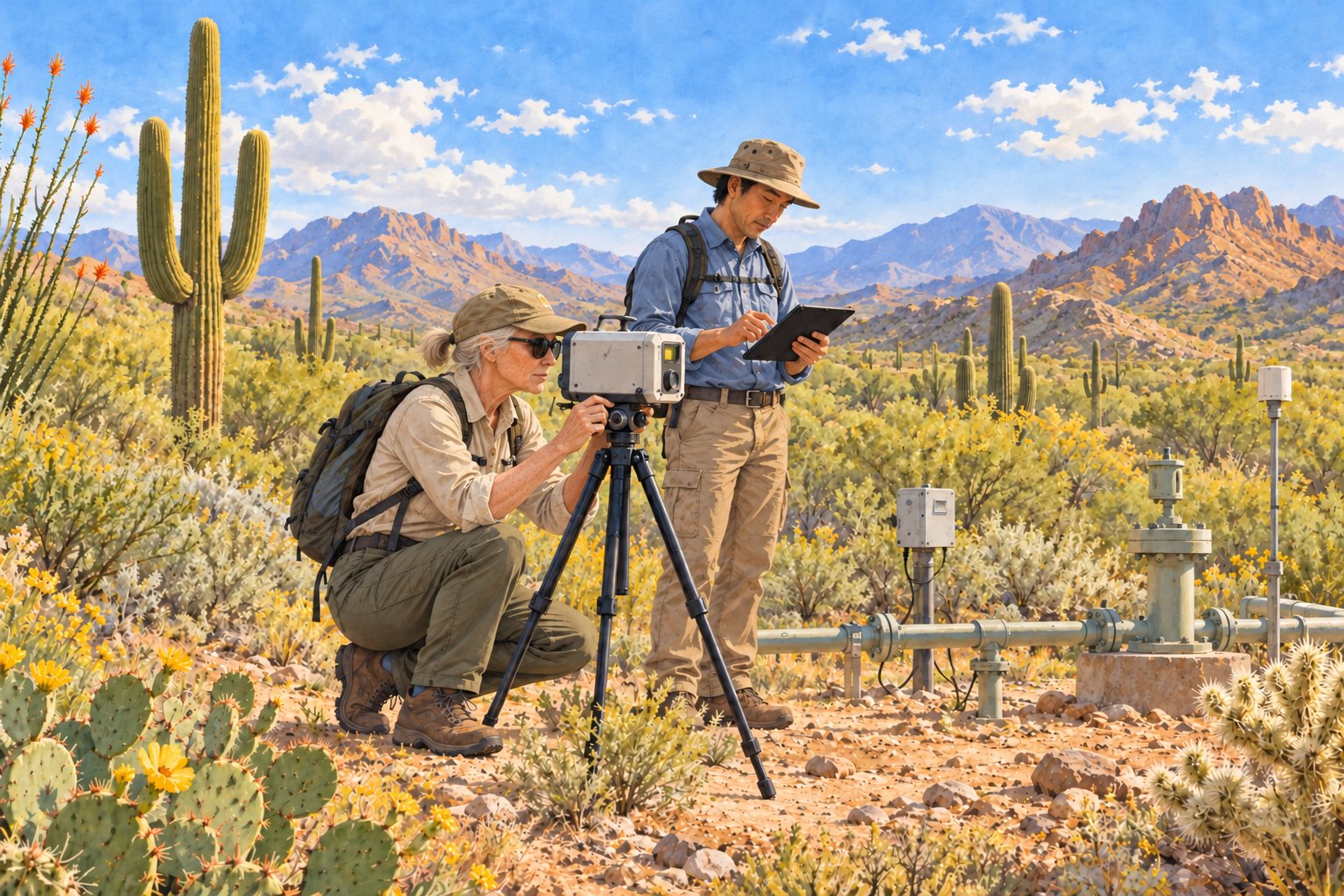
Stanford researchers compared satellite observations with 481 controlled methane releases in Arizona during 2025. Teams analyzed observations without knowing the release amounts. Dedicated methane sensors detected 92–100% of test plumes on clear days. The findings were published in Nature on October 14, 2026. Read Stanford’s study summary.
That is evidence of detection performance under the test conditions, not a claim that satellites find every leak everywhere. Clouds remained a problem, and many estimates of emission amounts differed substantially from the known releases. Some AI approaches also produced false alarms. Those limitations help explain why follow-up matters.
How do you see an invisible gas?
Methane absorbs particular wavelengths of infrared light. Instruments called imaging spectrometers can look for that distinctive pattern. NASA’s EMIT explanation shows how scientists use this spectral fingerprint to identify methane; the colored plumes on those maps are a visualization of measurements, not the gas’s visible color. Explore NASA’s explanation and example.
The practical question is what happens after a promising signal appears. A map becomes more useful when someone can verify the source, identify a responsible operator, and check the outcome of any repair.
A useful role for public attention
You do not need to become a remote-sensing expert to ask good questions. When a company or public agency announces a methane discovery, ask whether the source has been confirmed, whether corrective work is planned, and whether a later measurement is available. Keep the original date and location attached when sharing a finding.
For community groups, the most useful story may be a documented repair rather than the most striking plume image. That gives readers something concrete to learn from and gives operators a reason to show their work. Our environmental nonprofit directory is one starting point for finding organizations whose research and public-interest work you can examine.
Encouragement with a clear next step
The opportunity here is to connect a large climate problem with practical accountability. Better tools are worth celebrating when we also ask what they helped change. A detection count and a verified reduction answer different questions; a strong progress report makes room for both.
Evidence you can follow
Published and sources checked October 19, 2026. This article draws on the dated sources below. Findings are attributed to their authors; the practical questions and next steps are Good Green’s editorial guidance.
- Stanford Doerr School of Sustainability, October 14, 2026: study summary
- Nature research paper linked by Stanford
- NASA/JPL-Caltech, October 25, 2022: methane’s infrared fingerprint
Our account of the study uses the university summary. The journal paper is linked as the primary research record; we have not independently assessed its full text.