
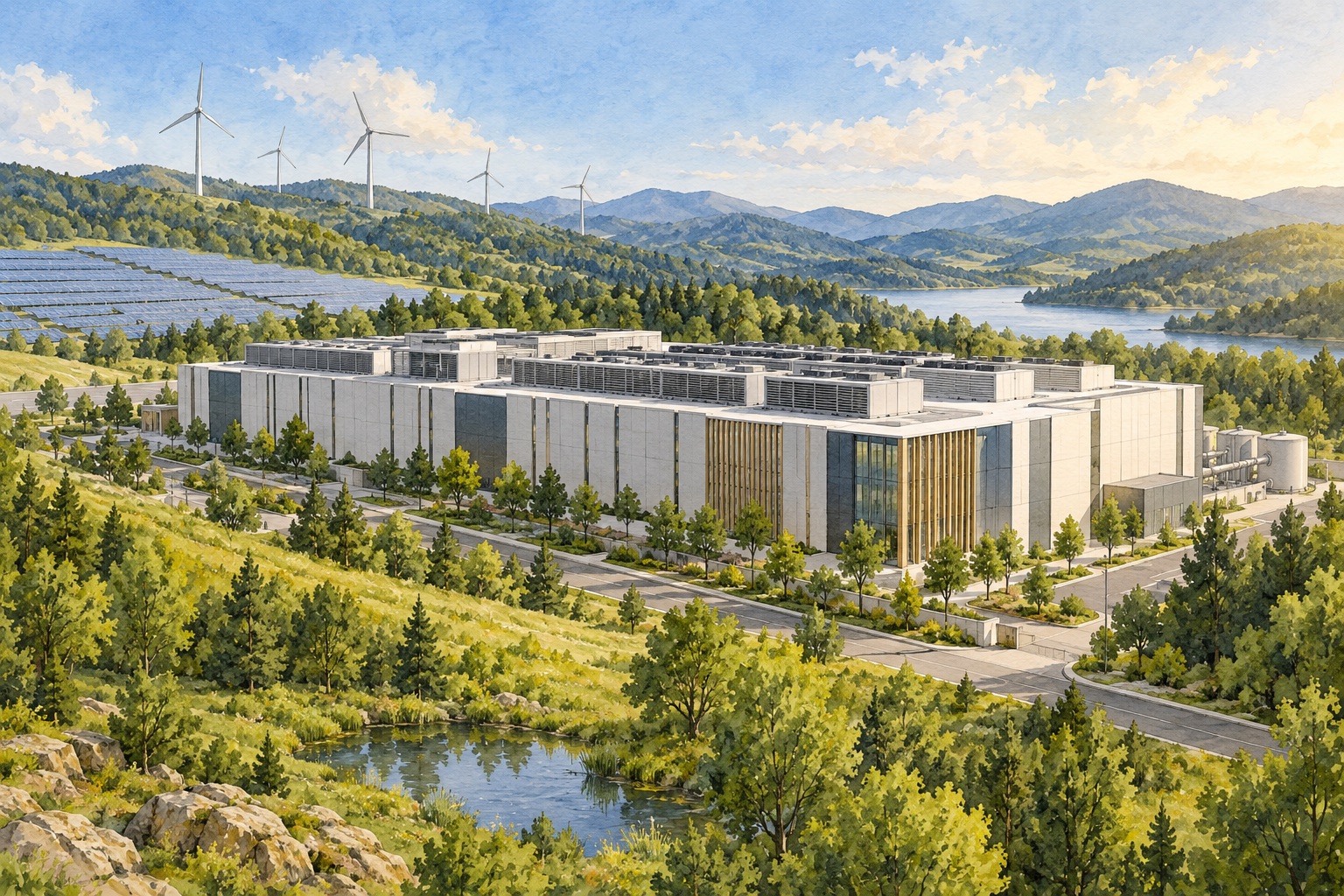
Our digital world needs electricity, cooling, and physical buildings. It also offers room for better ideas: cleaner power, carefully managed water, and heat that can serve a neighboring community instead of being wasted. This world tour looks at approaches worth learning from. The interesting question is how to turn a promising design into a benefit that operators can document.
Four places with ideas worth exploring
| Location and operator | Reported approach | Question still worth asking |
|---|---|---|
| Hamina, Finland: Google | Google’s 2024 announcement described offsite heat recovery and 97% carbon-free energy at that time. | What heat is actually delivered today, and what is the current hourly electricity match? |
| Iceland: Verne | The operator reports 100% renewable power at its Iceland location. | What are total electricity demand, construction impact, and local grid tradeoffs? |
| Norway: Green Mountain | The operator describes hydropower procurement and heat-reuse projects. | Which projects are operating, how much useful heat is sold, and how are certificates counted? |
| Zhangbei, China: Alibaba | Alibaba’s historical 2018 disclosure described wind and solar supply and cooling improvements. | Do newer site-level data substantiate the earlier claim? A historical claim is not a current certification. |
The examples below offer ideas to learn from, rather than a ranking of the greenest facilities. Google’s dated Hamina announcement, Verne’s locations, Green Mountain’s heat-reuse reporting, and Alibaba’s 2018 report and newer ESG library describe different approaches. These are operator sources with commercial interests, and we have not audited the sites. Treat them as starting points for asking how the designs perform in practice. Sources: Google’s dated Hamina announcement · Verne locations · Green Mountain heat reuse · Alibaba’s 2018 report · newer ESG report library
China’s opportunity: efficient computing and cleaner power
China’s enormous digital infrastructure makes its power transition especially important. The IEA’s 2025 analysis estimated coal supplied nearly 70% of electricity serving its data centers in the then-current national mix, with renewables around 20% and nuclear near 10%. Those estimates do not describe every facility. They explain why efficient cooling and cleaner electricity are complementary opportunities: progress on one is more valuable when the other improves too. Sources: IEA Energy and AI
Five questions that help good ideas deliver
- Is the claim about an annual renewable certificate purchase, physical supply, or hourly matching?
- What are the site’s absolute electricity use and emissions, including growth?
- How much water is consumed, where does it come from, and is that watershed stressed?
- Does recovered heat replace another heat source, and how much extra electricity do heat pumps need?
- Are local residents facing grid costs, noise, land-use impacts, or an opportunity cost for scarce clean power?
Efficiency is a useful piece of the story. Power usage effectiveness, or PUE, divides total facility energy by IT energy. An illustrative PUE of 1.2 means 20 extra energy units for every 100 used by computing. Pair that measure with carbon, water, and the value of the work being done; PUE does not measure those things. We want to celebrate documented reductions and help readers recognize the difference between an ambitious plan, reported performance, and independently verified results.