
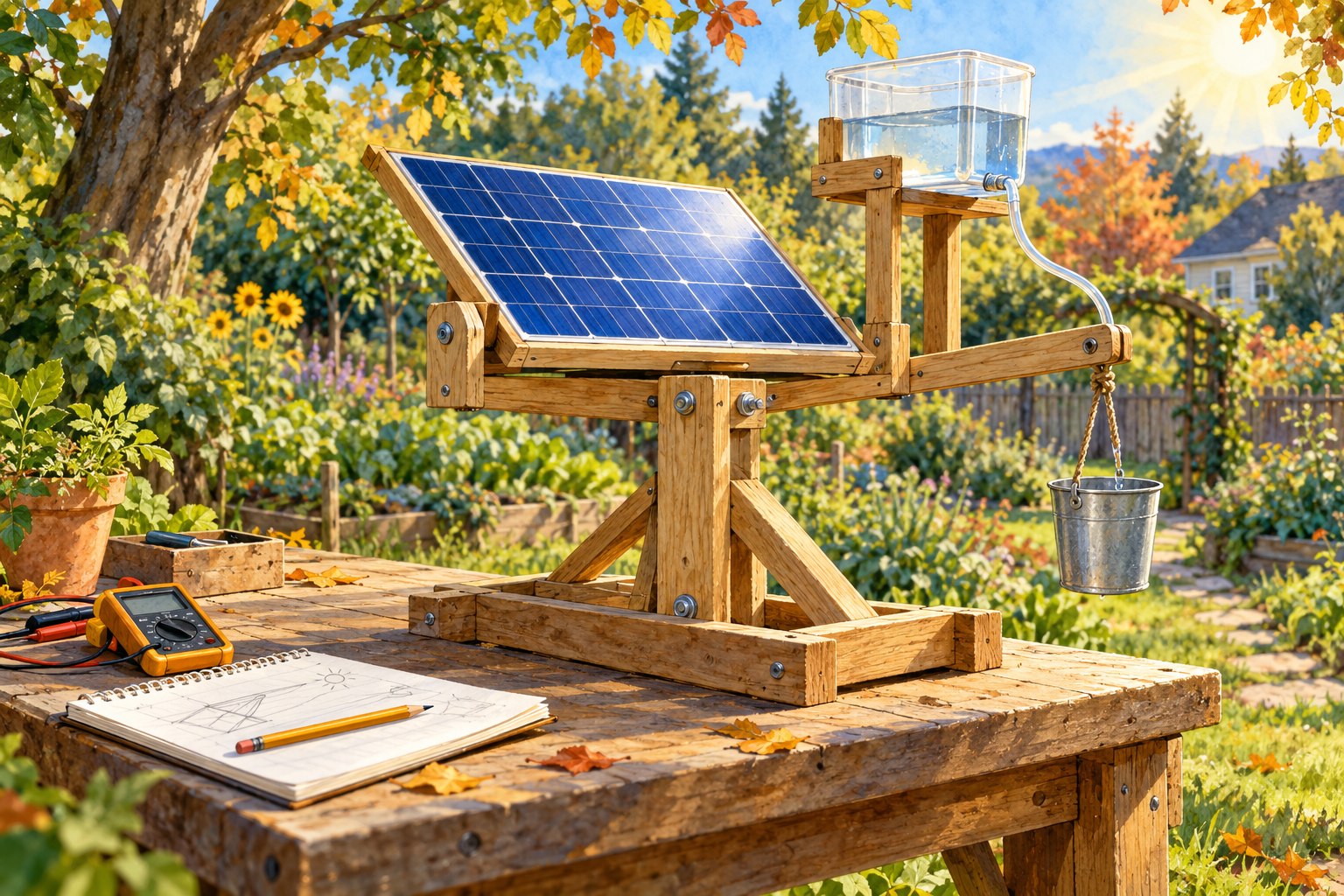
A clean-energy idea does not have to begin in a giant laboratory to be worth our attention. Sometimes the most inviting question is a small one: could a familiar object work a little better if we changed how it moves?
Jason Chang’s solar-tracking project is a lovely example of that spirit. The National STEM Festival’s 2026 champion page features his gravity-powered tracker at a reported $25, with no motor or electricity needed for its movement. The organizer links a pitch in which readers can explore the project directly. Find Jason on the champion page or watch the project pitch.
An inventive idea with a documented history
The Massachusetts Science + Engineering Fair’s official 2025 awards record lists Chang, of Worcester Academy, among first-place winners for An Eco-Efficient Solar Tracking System. It also records an Engineering Excellence Award. That is a useful primary record of the project’s recognition. See the 2025 award list (PDF).
Recent coverage can make an older project feel brand new. BGR revisited this tracker on October 28, 2026; earlier reporting appeared in the spring. We are sharing it as an inventor profile and an invitation to learn, rather than announcing a newly available product. Read the recent coverage.
Let gravity do some of the work
BGR describes a mechanism that uses water and gravity to reposition a solar panel rather than an electric motor. A changing water load moves a balanced support. In broad mechanical terms, moving water changes the forces on the frame, allowing the panel’s angle to change. The festival’s own listing confirms the central gravity-powered, motor-free concept.
That is an appealing engineering direction: look for a simpler way to perform one useful task. Gravity moves the mechanism; sunlight remains the source of the panel’s electricity. The arrangement does not create energy from nothing, and a practical system would need a way to refill or reset its moving water.
Panel direction and slope affect electricity production, alongside weather, shade, season, and location. The Australian Government’s solar guide explains those influences. A tracker tries to improve the panel’s exposure over time; how much that helps must be measured for the particular setup. Read how panel output is measured.
What does the reported $25 buy?
The price attached to the project is a prototype figure, not a retail offer for a complete solar installation. It should not be treated as the delivered cost of a weatherproof tracker, panel, battery, mounting system, or installation. BGR also identifies the device as a prototype rather than an established product for sale.
That does not take away the fun. Low-cost experimentation can make engineering approachable. It does mean we should leave room for the less glamorous work that turns an experiment into durable equipment: weather testing, structural design, service, replacement parts, and clear operating instructions.
A voltage headline needs one more question
CBS Boston reported about 20% higher voltage in outdoor comparisons. See the earlier reporting.
Voltage alone does not establish a percentage increase in electrical energy. The Department of Energy explains that power depends on both voltage and current. Energy adds the time dimension: watt-hours describe how much electricity is produced over a period. DOE’s performance explanation and the Australian Government’s power and energy guide help separate those measures.
The next experiments are part of the story
BGR notes freezing and evaporation as challenges for a water-based device. Our additional questions would include how wind affects the frame, how often it needs attention, whether the timing works across seasons, and whether a simpler fixed setup could deliver a better result for the same budget. These are questions for evaluation, not reported findings of failed tests.
For now, the most immediate value may be educational. A project like this invites people to connect a visible movement with a measurable result. It makes room for creativity, persistence, and the pleasure of understanding something a little better.
Evidence you can follow
Published and sources checked October 30, 2026. Research findings, prices, and recognition are attributed to the records below. Practical checklists and suggested next steps are Good Green’s editorial guidance. We have not tested the equipment or independently reproduced the research.
- National STEM Festival: 2026 champion listing and Jason’s project
- Jason’s project pitch, linked by the National STEM Festival
- Massachusetts Science + Engineering Fair: 2025 middle school awards (PDF)
- CBS Boston: project reporting, updated April 17, 2026
- BGR, October 28, 2026: renewed coverage and prototype context
- Department of Energy: photovoltaic performance and efficiency
- Australian Government: power, energy, and panel orientation
- University of Washington Clean Energy Institute: Solar Circuits lesson