
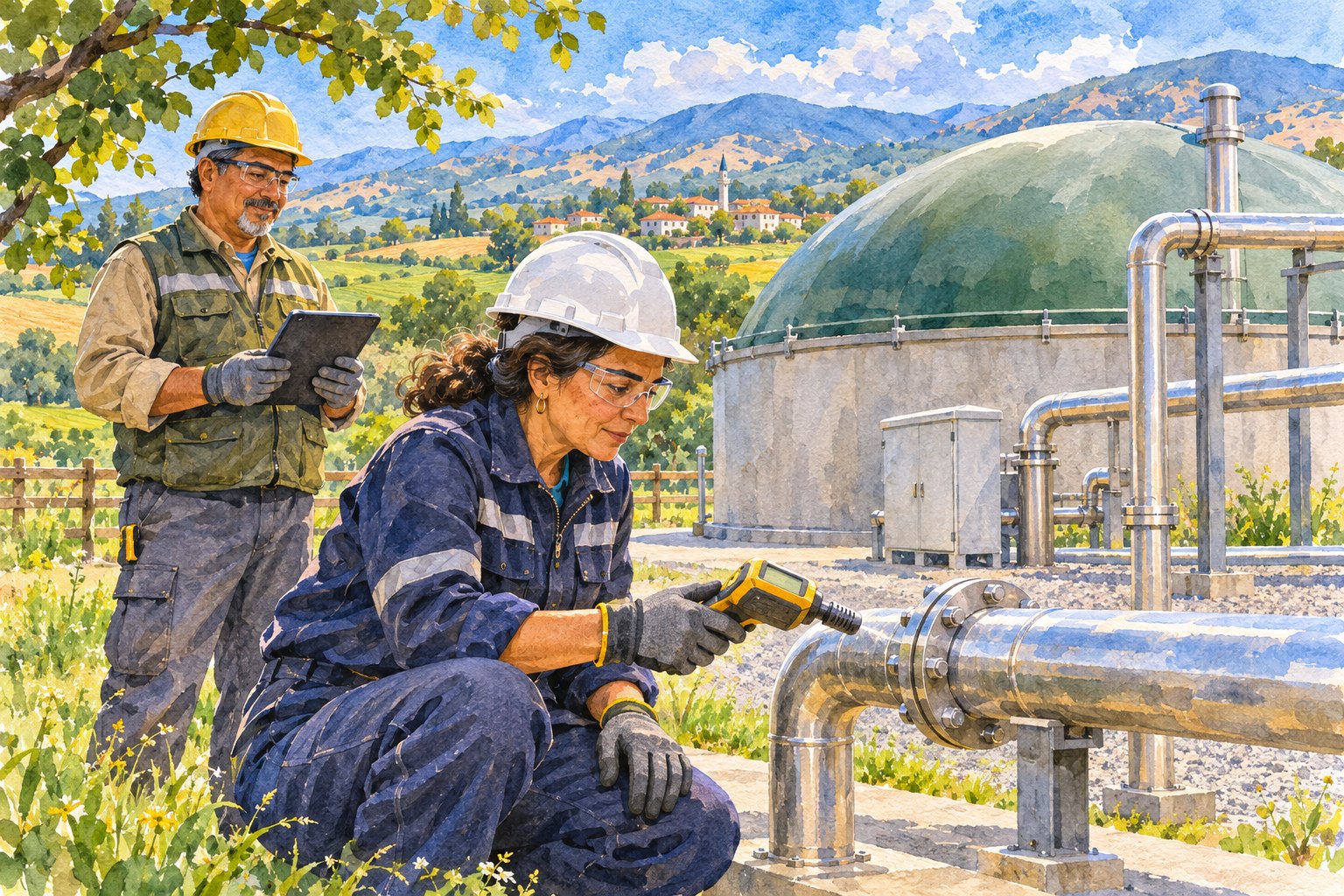
Seeing pollution from space is an extraordinary achievement. Sending the right people to investigate it, funding a workable response, and checking the result can be just as important. The distance between those steps is where a promising climate announcement either becomes useful or stays a headline.
COP31 has brought new attention and funding commitments to that challenge. There is a hopeful story here: practical improvements to equipment, waste systems, and public institutions can turn better information into cleaner outcomes. The money still needs to be followed.
Two announcements, with different jobs
The COP presidency's November 12 account reports more than $480 million in new philanthropic commitments for methane and other non-CO₂ pollutants. Separately, $25 million was announced to expand the Climate and Clean Air Coalition's Super Pollutant Country Action Accelerator. These figures describe announced support, not a single pot already spent on leak repairs. Read the funding announcement.
The larger commitment covers energy, agriculture, and waste, as well as areas such as black carbon, clean cooking, and cooling. The accelerator expansion names Côte d'Ivoire, Ethiopia, Fiji, Morocco, Pakistan, the Philippines, and Uzbekistan. It supports national teams, technical assistance, and project preparation. Country-level reporting from Nigeria describes the wider support effort.
That institutional work may sound less dramatic than a satellite image. It can be the missing link: someone must receive a notification, know who operates a site, arrange an investigation, and keep a usable record of what happened.
Detection is an invitation to act
UNEP's Methane Alert and Response System, or MARS, uses satellite observations to notify governments and companies about very large emissions. Its public data platform includes notifications and country response information. The system expanded from an initial oil-and-gas focus to coal and waste alerts in 2026. Explore UNEP’s explanation and public data links.
This builds on the question in our satellite methane article: what can better measurements help people fix? An image of a plume is not a completed repair. A company's acknowledgment is not proof that emissions fell. Different sources need different kinds of response, and useful reporting needs to keep those distinctions visible.
A response chain worth following
Guidance published by the IEA and UNEP in May sets out a five-step process for handling MARS notifications. In plain language, it moves from assigning the alert to contacting the operator, obtaining a response, verifying follow-up, and documenting the event. It recommends urgency-based timelines rather than one rigid deadline for every source. Read the technical response guidance.
From an alert to evidence
- Assign: A responsible team receives and classifies the notification.
- Contact: The operator is notified about the source.
- Respond: The operator investigates and describes its action.
- Verify: The response and necessary follow-up are checked.
- Record: The event, actions, and remaining questions are documented.
Our checklist for judging a climate funding promise
We will use six questions to follow this announcement. Readers can use the same questions when a local agency, company, or charity announces a pollution project. This is our editorial checklist, not an independent audit or a rating of any recipient.
| Question | Evidence worth asking for |
|---|---|
| Who committed the money? | Named funders, the period covered, and whether the amount is additional. |
| Who will receive it? | Recipient organizations, selection criteria, and the work each will do. |
| Has it been paid? | Disbursement dates and amounts, distinguished from announcements and approvals. |
| What is the starting point? | A dated baseline, measurement method, and identified source or activity. |
| What changed? | Documented action and repeat measurements that support the claimed reduction. |
| Will it last? | Maintenance responsibility, follow-up dates, and a way to report recurring emissions. |
Download the checklist as a CSV. A blank field is a question to investigate, not proof of wrongdoing. Equally, an attractive funding total is not evidence that every field has been answered.
Give communities a useful role
Different sources call for different solutions. A waste project, a farming program, and an industrial repair cannot be judged by the same equipment list. They can still be judged by a shared standard: explain the problem, involve the people affected, document the work, and publish what changed.
For local readers, a practical starting point is to ask a waste authority or elected representative how organic waste and methane are managed, which results are public, and how residents can participate. Follow the waste service's actual instructions. Keep equipment inspections and repairs with trained professionals; a news article is not a gas-system repair guide.
Evidence you can follow
Sources checked November 17, 2026. This is desk reporting, not attendance at COP31, an interview, or a field inspection. Original calculations and checklists are labeled. Conference announcements may change as negotiations continue; an announced commitment is not proof of delivery.